
Why Grain Structure Matters in Metal Castings

What OEM Engineers Should Know About Cooling, Grain Structure, and Casting Performance
When OEM engineers evaluate a component, the first focus is often alloy composition. But chemistry alone does not determine how an iron casting performs in the field. What truly influences durability, wear resistance, and fatigue strength is something much smaller and harder to see: grain structure.
Inside every casting is a microscopic network of crystalline structures called grains. The size and distribution of these grains affect how the material handles stress, vibration, and long term mechanical loads.
For OEMs designing equipment, understanding grain structure can help explain why some castings perform reliably for decades while others fail prematurely.
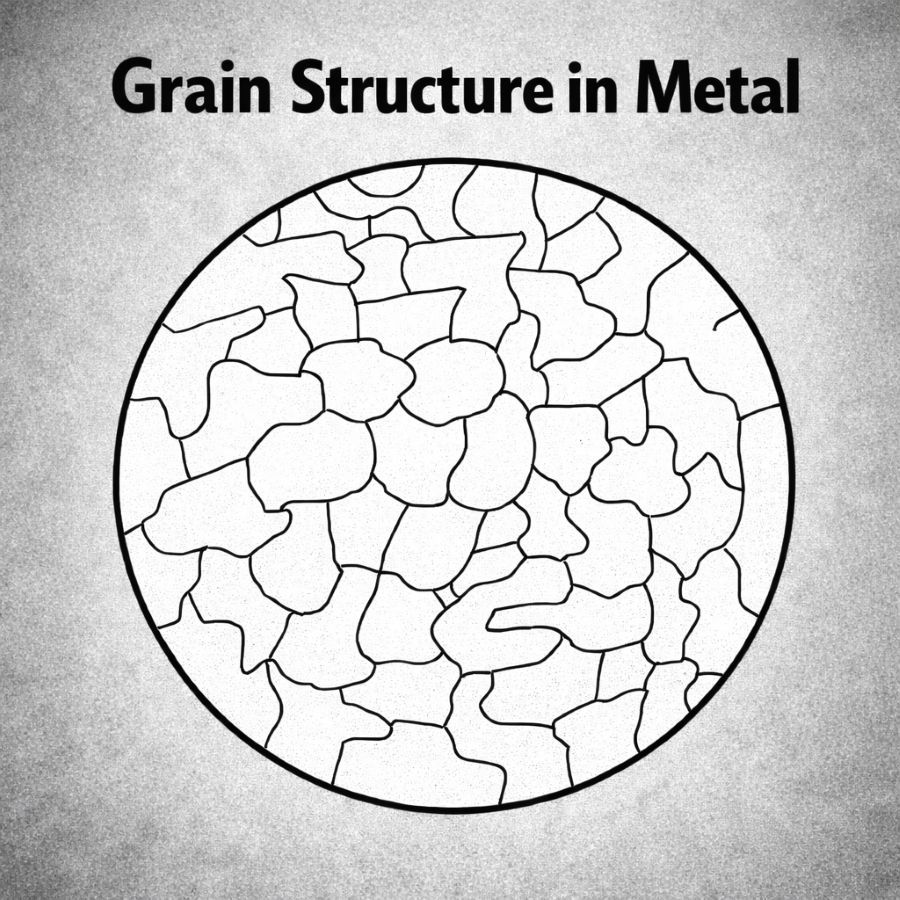
What Is Grain Structure in Iron Castings
When molten iron cools and solidifies inside a mold, the metal forms crystalline structures known as grains. Together, these grains create the microstructure of the material.
This internal structure influences key mechanical properties including:
Strength
Impact resistance
Fatigue life
Wear performance
Machinability
Two castings made from the same alloy chemistry can perform differently if their internal grain structure forms differently during solidification. That is why experienced foundries focus not only on alloy chemistry but also on controlling the casting process itself.
How Grain Structure Forms During Casting
Grain structure develops during the solidification stage of casting. As molten iron enters the mold and begins to cool, tiny crystal structures start to form. These crystals grow as the metal transitions from liquid to solid. Cooling rate plays a major role in this process.
Generally speaking:
Faster cooling creates smaller, finer grains
Slower cooling produces larger grains
In many industrial applications, finer grain structures help distribute stress more evenly throughout the material, which can improve strength and toughness. However, cooling rarely occurs uniformly throughout a casting. Areas closer to the mold walls cool first, while thicker sections solidify more slowly. Complex geometries and internal cores can also influence cooling patterns. For OEM components with internal passages, ribs, or heavy sections, these variations must be carefully considered during casting design.
Why Cooling Control Matters for OEM Components
For manufacturers building heavy equipment, industrial machinery, and wear components, grain structure directly affects real world performance.
Proper control of the casting process can help deliver:
Improved fatigue resistance: Critical for parts exposed to repeated loading or vibration.
Better wear performance: Important for components operating in abrasive environments.
Consistent mechanical properties: Uniform microstructure leads to predictable machining and long term reliability.
Foundries influence these outcomes by carefully managing:
Mold design
Section thickness
Pour temperature
Cooling conditions
Metal chemistry and inoculation
These factors determine how the casting solidifies and ultimately how the component performs in service.
Casting Expertise Matters
From the outside, an iron casting may appear simple. But inside the metal is a carefully formed microstructure created through controlled foundry practices. Producing reliable gray and ductile iron castings requires attention to multiple variables during melting, pouring, and cooling. Small adjustments in temperature, mold design, or cooling rate can significantly influence the final grain structure.
This is why OEMs working with complex or high performance components often prioritize foundries with deep casting experience and metallurgical control.
Supporting OEMs with Reliable Iron Castings
At Trumbull Foundry & Alloy, our team works with OEM manufacturers that require dependable iron castings for demanding industrial applications.
Our Ohio foundry produces gray and ductile iron castings from 1 to 3,000 pounds, including components with complex cores and internal geometries. With low to medium production runs and rapid lead time capability, we support manufacturers looking for reliable domestic casting partners.
If your engineering team is evaluating casting performance or sourcing iron castings for new or existing equipment, our team is always open to a technical conversation.
Learn more about our capabilities: www.trumbullfoundry.com 🔥
Sources:
What Is Grain Structure in Metal? Weforging

Written in partnership with Jessica Creative Strategies


